Digestive problems such as persistent acidity, stomach pain, difficulty swallowing, or unexplained nausea often require detailed examination of the digestive tract. One of the most effective diagnostic tools used by doctors is endoscopy. However, many patients get confused between Endoscopy and OGD Scopy. While the terms are related, they are not exactly the same.
In this blog, we will explain the difference between Endoscopy and OGD Scopy, their purpose, procedure, and when doctors recommend these tests.
What Is Endoscopy?
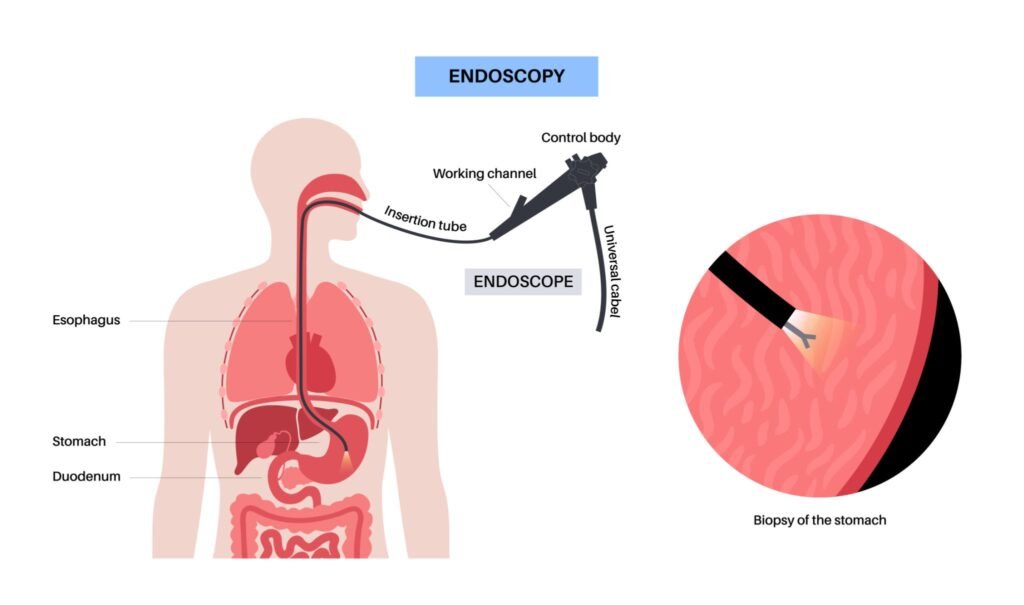
Endoscopy is a medical procedure that allows doctors to examine the inside of the body using a thin, flexible tube called an endoscope. The endoscope has a small camera and light at its tip, which helps doctors view internal organs on a screen.
Endoscopy is a broad term that refers to procedures used to examine different parts of the body such as the digestive tract, lungs, joints, or urinary system.
Common Types of Endoscopy
-
Gastroscopy / OGD Scopy – Examines the upper digestive tract
-
Colonoscopy – Examines the large intestine (colon)
-
Bronchoscopy – Examines the lungs and airways
-
Cystoscopy – Examines the urinary bladder
Endoscopy helps doctors diagnose, monitor, and sometimes treat various medical conditions.
What Is OGD Scopy?
OGD Scopy stands for Oesophago-Gastro-Duodenoscopy. It is a specific type of endoscopy used to examine the upper digestive system, including:
-
Oesophagus (food pipe)
-
Stomach
-
Duodenum (first part of the small intestine)
During an OGD Scopy procedure, a flexible endoscope is inserted through the mouth and throat to view these organs clearly.
This procedure helps doctors detect conditions affecting the upper gastrointestinal (GI) tract.
| Feature | Endoscopy | OGD Scopy |
|---|---|---|
| Definition | A general term for procedures used to view internal organs using an endoscope | A specific type of endoscopy used to examine the upper digestive tract |
| Area Examined | Various organs in the body | Esophagus, stomach, and duodenum |
| Scope | Broad category | Subtype of endoscopy |
| Purpose | Diagnose and treat multiple conditions | Diagnose problems in the upper GI tract |
| Examples | Colonoscopy, bronchoscopy, cystoscopy | Upper GI endoscopy (OGD Scopy) |
Simply put, OGD Scopy is one type of endoscopy focused on the upper digestive system.
Why Doctors Recommend OGD Scopy
Doctors may suggest OGD Scopy if you experience symptoms such as:
-
Persistent acidity or heartburn
-
Difficulty swallowing
-
Chronic stomach pain
-
Nausea or vomiting
-
Vomiting blood
-
Black stools
-
Unexplained weight loss
The test helps identify conditions such as:
-
Gastritis
-
Peptic ulcers
-
GERD (acid reflux)
-
Esophageal inflammation
-
Stomach infections
-
Tumors or early signs of cancer
Early diagnosis through OGD Scopy can help ensure timely and effective treatment.
How the Procedure Is Performed
OGD Scopy is a minimally invasive procedure that usually takes about 10–20 minutes.
Steps involved:
-
The patient is asked to fast for several hours before the procedure.
-
A local anesthetic spray or mild sedation may be given to reduce discomfort.
-
The doctor gently inserts a thin flexible endoscope through the mouth.
-
The camera transmits images to a monitor for detailed examination.
-
If necessary, the doctor may take a small tissue sample (biopsy) for further analysis.
Most patients can return home the same day after the procedure.
Benefits of OGD Scopy
OGD Scopy offers several advantages, including:
-
Early detection of digestive disorders
-
Accurate diagnosis of stomach and esophageal conditions
-
Quick and minimally invasive procedure
-
Ability to perform biopsy during the test
-
Helps guide proper treatment
Because of its accuracy and safety, OGD Scopy is considered one of the most reliable diagnostic tools for upper GI problems.
When Should You See a Doctor?
If you experience symptoms such as persistent acidity, difficulty swallowing, stomach pain, or unexplained digestive issues, it is important to consult a doctor. Early evaluation and appropriate tests like OGD Scopy can help diagnose the underlying condition and prevent complications.
Conclusion
Although the terms are often used interchangeably, Endoscopy and OGD Scopy are not exactly the same. Endoscopy is a general category of procedures used to examine internal organs, while OGD Scopy specifically focuses on the upper digestive tract, including the esophagus, stomach, and duodenum.
Understanding the difference can help patients feel more confident and informed when their doctor recommends these diagnostic tests.
FAQs
1. Is OGD Scopy the same as endoscopy?
OGD Scopy is a type of endoscopy that specifically examines the upper digestive system.
2. Is OGD Scopy painful?
No, the procedure is usually painless and comfortable, especially when mild sedation is used.
3. How long does an OGD Scopy test take?
The procedure generally takes 10 to 20 minutes.
4. Do I need to stay in the hospital after OGD Scopy?
Most OGD Scopy procedures are daycare procedures, so patients can usually go home the same day.
5. What should I avoid before the test?
Patients are usually advised to avoid eating or drinking for 6–8 hours before the procedure.